


⛑️ How to Stay Safe on the Mountain: 12 Rules Every Rider Should Know
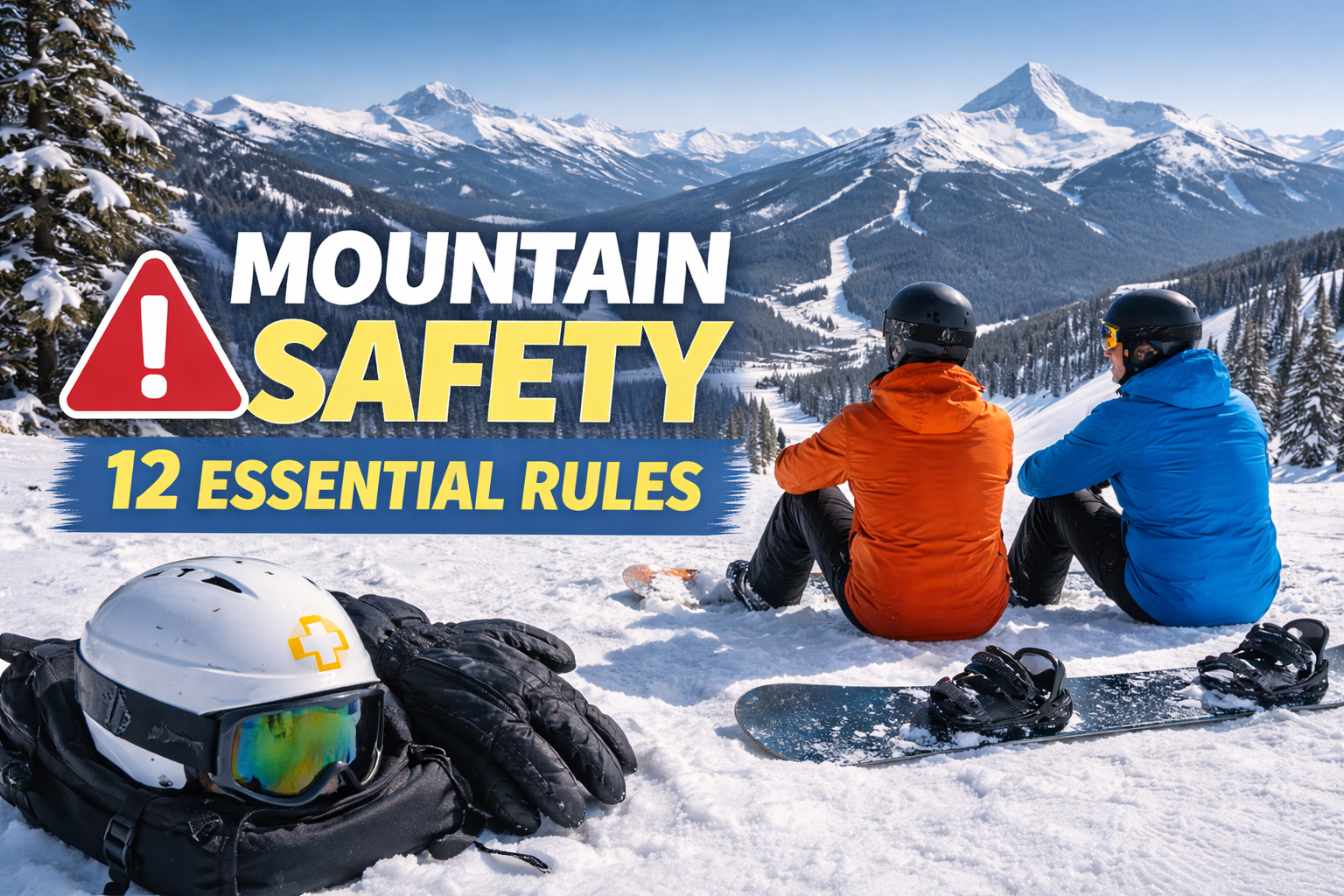
Snowboarding and skiing are exciting, freeing, and incredibly fun — but safety should always come first. Whether you’re a beginner or an experienced rider, knowing how to stay safe on the mountain protects you and everyone else around you.
These are the 12 essential mountain safety rules every skier and snowboarder should follow every single time they ride.
🏂 1. Always Wear a Helmet
Helmets dramatically reduce the risk of head injuries. Most serious accidents happen at moderate speeds, not extreme ones.
If you’re riding without a helmet, you’re taking an unnecessary risk — plain and simple.
🎿 2. Ride in Control at All Times
You should always be able to stop or avoid people below you.
If you’re flying past others or struggling to slow down, you’re riding terrain that’s too advanced for your current skill level.
⛷️ 3. Know the Skier’s Responsibility Code
Every resort follows a responsibility code that includes:
-
People downhill have the right of way
-
Look uphill before starting or merging
-
Stop only where you’re visible
Ignoring these rules puts everyone in danger.
🧭 4. Choose Terrain That Matches Your Ability
Green, blue, and black trails exist for a reason.
Jumping into advanced terrain before you’re ready increases injury risk and slows your progression. There’s no shame in sticking to easier runs.
🧤 5. Dress for the Conditions
Cold, wet, or windy conditions increase the chance of hypothermia and frostbite.
Wear:
-
Waterproof outerwear
-
Proper base layers
-
Gloves or mittens
-
Goggles for visibility
Comfort = safety.
🚡 6. Use Lifts Properly
Pay attention at loading and unloading zones. Most lift-related injuries happen because riders are distracted or rushing.
If you fall, move out of the unloading area immediately.
🧊 7. Watch for Changing Snow Conditions
Snow can change throughout the day:
-
Morning ice
-
Afternoon slush
-
Wind-blown hardpack
Adjust your speed and technique as conditions shift.
🚧 8. Obey All Signs and Closures
Closed trails are closed for a reason — avalanches, thin snow, or hazards.
Duck ropes can lead to serious injury, fines, or loss of lift privileges.
🧍 9. Stop in Safe, Visible Areas Only
Never stop:
-
Below drops or rollers
-
In narrow trails
-
Where you’re hidden from uphill riders
If you need to rest, move to the side of the trail where others can see you.
🩹 10. Know Basic Mountain Etiquette
Respect other riders:
-
Don’t cut lift lines
-
Give people space
-
Avoid sudden stops
Good etiquette keeps the mountain enjoyable for everyone.
📱 11. Carry a Phone and Emergency Info
A charged phone can save lives. Make sure someone knows where you’re riding, especially on big mountains or powder days.
Some resorts also offer emergency apps — use them.
🏁 12. Know When to Call It a Day
Fatigue causes mistakes.
If your legs are tired, your focus is fading, or conditions worsen, it’s smarter to stop early than risk injury at the end of the day.
❄️ Final Thoughts
Mountain safety isn’t about limiting fun — it’s about making sure you get to ride again tomorrow.
By following these 12 rules, you protect yourself, respect other riders, and help keep the mountain a safe place for everyone.
Ride smart, ride aware, and enjoy every run.

 Arabic
 French
 Spanish
 Portuguese
 Deutsch
 Turkish
 Dutch
Dutch
 Italiano
 Russian
 Romaian
 Portuguese (Brazil)
 Greek
Greek