

🧊 How to Ski or Snowboard on Ice Without Losing Control
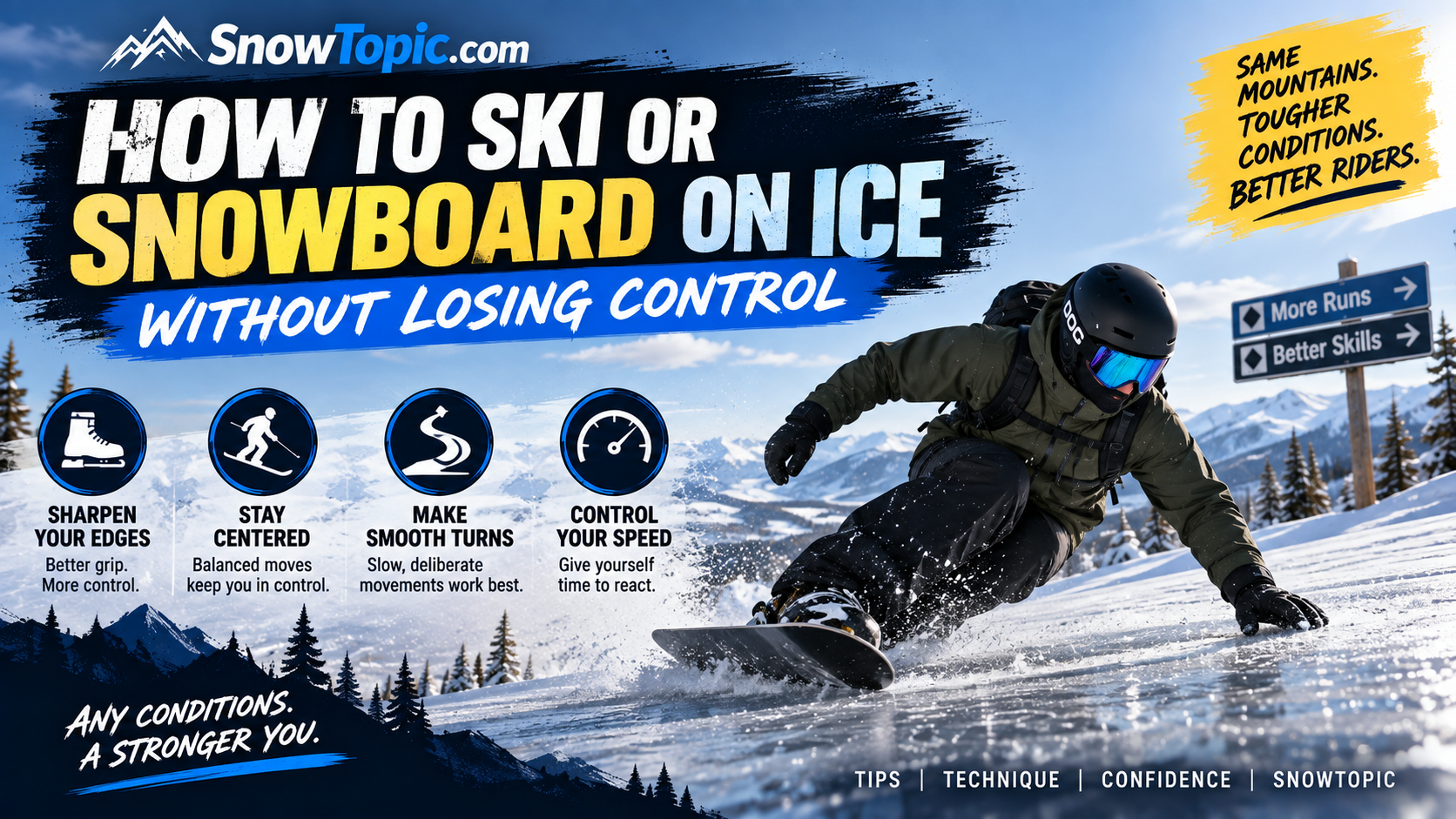
Fresh powder gets all the attention, but many riders eventually encounter the exact opposite: hard, slick, icy snow.
On ice, your edges don’t grip the way they do on softer snow. Turns can feel less predictable, stopping takes longer, and trying to force your edges can send you sliding.
The goal isn’t to ride ice exactly like packed powder. It’s to adjust your technique, speed, and expectations to the conditions.
🧠 Why Is Ice So Difficult to Ride?
Your skis or snowboard normally dig into the snow during a turn.
On an icy surface, there’s much less material for your edges to penetrate. That means:
- Less edge grip
- Longer stopping distances
- Less forgiving turns
- Greater consequences from sudden movements
This is why a run you normally consider easy can suddenly feel much harder after it becomes icy.
🔪 Make Sure Your Edges Are Sharp
Technique matters, but your equipment matters too.
Dull edges have difficulty gripping firm snow. Properly maintained edges can provide noticeably better control on hardpack and icy terrain.
Before riding regularly in firm conditions, inspect your edges for excessive dullness, burrs, or damage.
A professional ski or snowboard shop can sharpen them if needed.
🏂 Stay Centered Over Your Board or Skis
When riders get nervous, they often lean backward.
That usually makes control worse.
Instead:
- Keep your knees flexed
- Maintain an athletic stance
- Keep your weight centered
- Avoid sitting heavily on your back leg
You want to remain balanced enough to respond when your edges lose some grip.
🔄 Make Smooth, Predictable Turns
Ice rewards smooth technique.
Avoid suddenly throwing your snowboard sideways or aggressively twisting your skis.
Instead:
- Initiate turns gradually
- Apply edge pressure progressively
- Keep your movements controlled
- Finish each turn before beginning the next
Think precision rather than aggression.
🐢 Reduce Your Speed
You don't need to crawl down the mountain, but this isn't the time to test your maximum speed.
Give yourself additional room to:
- Turn
- Stop
- Avoid other riders
- React to changing snow
Remember that a trail may alternate between grippy snow and slick patches within the same run.
👀 Learn to Spot Icy Areas
Ice isn't always obvious, but there are clues.
Watch for areas that appear:
- Shiny
- Glossy
- Scraped clean
- Different in texture from surrounding snow
Heavily traveled sections near intersections and steep portions of trails can also become scraped down as the day progresses.
Looking farther ahead gives you time to adjust your line.
🎿 Don't Depend on a Sudden Stop
A hard emergency stop that works beautifully on soft snow may produce a long slide on ice.
Control your speed before you need to stop.
Use the shape of your turns to manage speed rather than repeatedly accelerating and braking hard.
🧊 What If Your Edge Starts Sliding?
Don't immediately panic and make a huge movement.
Try to:
- Stay balanced
- Keep your knees flexible
- Avoid stiffening your entire body
- Regain control progressively as traction returns
Overcorrecting can turn a small slip into a fall.
🏔️ Choose Terrain Appropriate for Your Ability
A steep icy trail is dramatically different from a mellow groomer with a few firm patches.
If you're still learning, practice on easier terrain first.
There's nothing wrong with changing trails when conditions exceed your current comfort or skill level.
⚠️ Know When Conditions Aren't Worth It
Sometimes the safest technique is simply choosing another run.
If a trail is extremely icy, crowded, or beyond your ability, take an easier route or return when conditions improve.
Being able to recognize when conditions aren't suitable for you is part of becoming a better rider.
🏁 Final Thoughts
Ice can be intimidating, but learning to handle firm conditions will make you a much more adaptable skier or snowboarder.
Remember the fundamentals:
Stay centered. Keep your edges maintained. Make smooth turns. Control your speed early. Look ahead.
You can't change the snow underneath you.
But you can change how you ride it.

 Arabic
 French
 Spanish
 Portuguese
 Deutsch
 Turkish
 Dutch
Dutch
 Italiano
 Russian
 Romaian
 Portuguese (Brazil)
 Greek
Greek