


🌨️ How to Read Snow Conditions: Powder, Ice, Slush & More
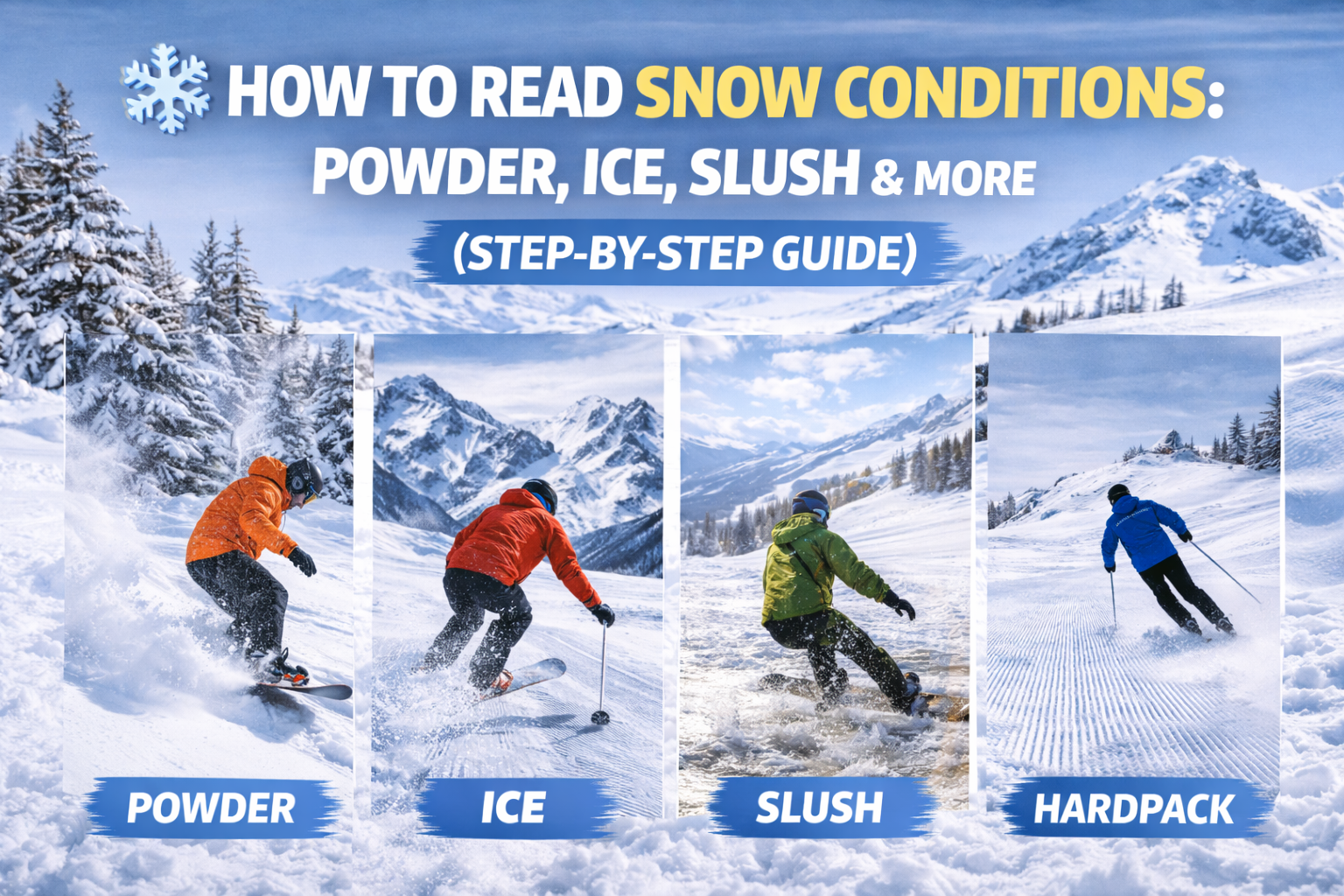
Not all snow is created equal. One day the mountain feels smooth and effortless, the next it feels slow, slippery, or unpredictable. Knowing how to read snow conditions helps you ride safer, choose the right terrain, and adjust your technique for a better experience. This guide breaks down the most common snow conditions you’ll encounter — and how to ride each one confidently. ❄️ Powder What it is: Fresh, light snow that hasn’t been groomed or packed down. What it feels like: Soft, floaty, and forgiving — often considered the best snow to ride. How to ride it: Keep your weight slightly back Make smooth, wide turns Maintain steady speed Powder rewards relaxed movements and flow. 🧊 Ice What it is: Hard, slick snow often caused by thaw-freeze cycles or heavy traffic. What it feels like: Fast, slippery, and unforgiving. How to ride it: Keep edges sharp Stay balanced over the board or skis Make controlled, deliberate turns Avoid sudden movements On icy days, confidence comes from control — not speed. 🌫️ Hardpack What it is: Snow that’s been groomed and packed down firmly. What it feels like: Consistent and predictable, but less forgiving than powder. How to ride it: Focus on clean edge engagement Practice carving Maintain good posture Hardpack is great for improving technique. 🌤️ Slush What it is: Wet, heavy snow caused by warm temperatures, usually in spring. What it feels like: Sticky and slow, especially later in the day. How to ride it: Stay light on your feet Carry a little extra speed Use fresh wax designed for warm conditions Slush can be fun — if you stay loose and playful. 🌬️ Wind-Blown Snow What it is: Snow that’s been reshaped by strong winds, often uneven. What it feels like: Inconsistent — soft in some spots, hard in others. How to ride it: Stay alert Adjust quickly to changing textures Avoid overcommitting to turns Expect surprises and ride cautiously. 🌲 Chopped-Up Snow (Crud) What it is: Powder that’s been tracked out and piled up by other riders. What it feels like: Bumpy, heavy, and tiring. How to ride it: Bend your knees Absorb bumps with your legs Keep a strong, centered stance Crud tests endurance more than technique. 🧠 How to Check Snow Conditions Before You Ride Before heading out: Check the resort’s snow report Look at recent snowfall totals Note temperature changes Watch live mountain cams Knowing conditions ahead of time helps you plan terrain and gear. ⚠️ Why Snow Conditions Matter for Safety Misjudging snow conditions can lead to: Unexpected falls Lost control on ice Fatigue in heavy snow Adapting your riding style keeps you safer and more confident. 🏁 Final Thoughts Understanding snow conditions turns frustration into confidence. Once you learn how powder, ice, slush, and hardpack behave, you stop fighting the mountain and start flowing with it. Every condition has something to teach you — and mastering them all makes you a stronger rider.

 Arabic
 French
 Spanish
 Portuguese
 Deutsch
 Turkish
 Dutch
Dutch
 Italiano
 Russian
 Romaian
 Portuguese (Brazil)
 Greek
Greek